
Patrick killed them and framed Lindsay
The defense did not deny that Lindsay committed the acts; it argued lack of criminal responsibility.
View sourceThe public is keeping score
Defamation is a false statement of fact, published to others, that damages a person’s reputation. Calling it an opinion does not shield a false statement of fact from a defamation claim. Posts that present the Patrick Clancy conspiracies as fact are preserved here for counsel: submit screenshots of public posts or comments for private, structured review, with the full account handle, the complete statement, and the original URL whenever it is available.
Evidence intake
What counsel looks for: a statement of fact, not a question and not a plainly labelled opinion, that accuses Patrick Clancy of a crime the trial record does not support, posted where other people could see it. Questions are fair. Accusations need evidence. Your original screenshots are kept privately. Automatic text extraction helps us sort submissions; it never decides whether a statement is defamatory. Counsel and human reviewers make that call.

Claim vs. record
These summaries distinguish a contradicted claim from an unsupported allegation or a false inference. Open the complete claims register for all 62 entries and their sources.
The defense did not deny that Lindsay committed the acts; it argued lack of criminal responsibility.
View sourceEmployees, transactions, surveillance, calls, and device evidence were used to corroborate the errand.
View sourceA timestamp is not geolocation. That conclusion requires authenticated device and network metadata.
View digital evidenceA different-user theory needs evidence of transfer, remote control, account compromise, or conflicting device artifacts.
View device coverageThe testimony described a claimed male voice as part of the psychosis evidence; “male” does not identify Patrick.
View testimony coverageToxicology shows exposure, not who administered a medication. Covert dosing requires independent proof.
View toxicology summaryThe claim needs authenticated router logs, cloud-camera records, outage history, and evidence of deliberate interference.
Open trial archiveNo cited trial evidence places Rachel at the scene or connects her to the acts. Later relationships do not prove earlier motive.
View defense responseNo usable print is not proof of wiping. Surface, blood, moisture, pressure, movement, and handling affect recovery.
View forensic testimonyTemperature after major trauma cannot be converted into exposure time with a simple degrees-per-minute formula.
View medical explanationReturn of circulation is not a stopwatch for when oxygen deprivation began.
View medical summaryInvestigators collected statements, calls, scene evidence, transactions, surveillance, and device evidence.
View the January 24 recordDiscrepancies and missing prints are not affirmative evidence that another person deliberately altered the scene.
View evidence summaryPost-event relationships or grief conduct are not forensic proof of a prior homicide plan.
View the defense responseThe reported split concerned criminal responsibility, not an alternative-perpetrator theory. A mistrial is no verdict.
View mistrial coverageThe record included statements, physical evidence, DNA, toxicology, digital evidence, medical evidence, and testimony.
View evidence summaryA gap in a reconstructed timeline is not evidence of a return home. Surveillance video places Patrick inside CVS at 5:32 and at ThreeV at 5:54. A gap has to be explained by the evidence, not filled with a theory.
View the January 24 timelineThe 911 recording and his testimony document the sequence: he found Lindsay critically injured and called for help; he testified he asked where the children were; he stayed on the line until responders arrived, then went to the basement. None of it supports prior knowledge.
View the day the call was playedWhere the record leaves us
100%
Undisputed. Her defense stipulated to the acts on August 4, 2026 and never contested that she caused the deaths. The only question at trial was criminal responsibility, which the jury did not decide. That question is not scored here.
The stipulation, August 4, 20260%
No evidence. Investigators tested his account against surveillance video, phone records and witnesses. No exhibit or testimony implicated him, neither side suggested he was involved, and Lindsay's own lawyer has rejected the online allegations. Confidence in his innocence: 100%.
Claim 1 in the registerReviewed with Claude by Anthropic The public trial record, the press coverage and the sources in the claims register were reviewed with Claude, an AI model from Anthropic that has no stake in the case.
The record on support
A recurring claim online is that Patrick Clancy did nothing for Lindsay while she was ill and that he was a bad husband and father. The record shows otherwise. Her own clinicians testified that he came to appointments, questioned her medications and called them with her on her worst day. His sworn testimony and his public statements show him driving her to hospitals, pushing for inpatient care, checking on her every day and forgiving her publicly within days of the children's deaths. Each entry below is dated, written in plain language and linked to a single source.
Summer and fall 2022
After Callan was born on May 26, 2022, Patrick took twelve weeks of paternity leave and testified that he always put money aside in case Lindsay needed more time away from work. He and Lindsay alternated preschool drop-offs and pickups for the two older children, and in August or September 2022 the couple hired a nanny for twelve hours a week, mainly for Callan.
Trial testimony Patrick Clancy testifies, The Boston Globe live updates, July 27, 2026
September to November 2022
As Lindsay's return to work approached in September 2022 and her anxiety grew worse, she postponed her start date with Patrick's support. He felt her video visits with her psychiatrist were limited to medication management, and he told The New Yorker that he called more than a dozen therapists looking for someone who could see her, and found none with immediate availability.
Reporting A husband in the aftermath of his wife's unfathomable act, The New Yorker, October 14, 2024
December 2022
About a month before January 24, 2023, Lindsay told Patrick she was having thoughts about harming herself or the children. He testified that he asked her whether she thought she needed to be kept away from them, and that she said no. He said the answer was confusing because a minute later she was making the children lunch or playing with them, and that he never saw Lindsay harm the kids.
I think I asked her at some point, 'Do you think you need to be kept away from them?' She said no. It was very confusing because a minute later she was making them lunch or playing with them.
Trial testimony Her ex-husband describes growing concern for his children's safety, WBUR, July 27, 2026
December 2022
Lindsay's psychiatrist, Dr. Jennifer Tufts, testified that all fourteen of her appointments with Lindsay were by video and that Patrick attended one of them. She said that in December 2022 Patrick let her know his wife was not doing well and that he thought her problems could be linked to the Seroquel, an antipsychotic another provider had prescribed.
Trial testimony Dr. Jennifer Tufts testifies, The Boston Globe live updates, August 10, 2026
December 5 and 6, 2022
On December 5, 2022 Patrick joined Lindsay's therapy session and told the counselor her anxiety was vastly worse since the medications began. The next day he came to her only in-person appointment with nurse practitioner Rebecca Jollotta and pressed the medication concern; when Jollotta raised bipolar disorder he said he did not believe his wife was bipolar, and the couple asked to try a different antidepressant. Jollotta testified that he also spoke with her by phone twice, that he seemed invested in Lindsay's care, and that he was concerned about what the medications were doing to his wife.
Trial testimony Rebecca Jollotta testifies, Boston.com live coverage, August 11, 2026
December 15 and 30, 2022
On December 15, 2022 Patrick and Lindsay called Jollotta together to say it had been the worst day for Lindsay, who was having persistent thoughts of suicide. Jollotta told them to go to Massachusetts General Hospital and recommended inpatient care; Lindsay went to the emergency room and chose to stay outpatient. On December 30, 2022 Patrick called South Shore Health to say his wife was safe but wanted to go to McLean Hospital, trying to secure a bed.
Trial testimony Day 11: Rebecca Jollotta and Julie Paul testify, CBS Boston, August 11, 2026
December 20, 2022
On December 20, 2022 Patrick drove Lindsay to the postpartum program at Women and Infants Hospital in Providence, Rhode Island, and took Dawson skiing after dropping her off. Later that day Lindsay called to say he needed to come back to talk with the doctors, whose team felt the program was not the right fit. She spent half a day there before they drove home, where her parents were staying to help.
I think she was scared.
Trial testimony Patrick Clancy testifies, day two, The Boston Globe live updates, July 29, 2026
December 31, 2022 to January 5, 2023
By the time Lindsay went into McLean Hospital over New Year's she was scared and did not want to go. Patrick testified that it was the second time they had gone to the emergency room and that he told her she had to go. He visited her during her five-day stay and said he felt she had been getting better afterward.
She was scared; she didn't want to go. But I think it was the second time we went to the ER, and I said, 'You have to go.'
Trial testimony Patrick Clancy describes Lindsay as a dedicated mother, Boston.com, July 29, 2026
January 2023
Lindsay was transferred to McLean from Massachusetts General Hospital early on January 1, 2023 and stayed five days. Patrick testified that he was not aware of any insurance problem with her care, and that he would not have cared, because he would have paid anything. After she came home on January 5, around Cora's birthday, he checked in with her every day about how she was feeling.
But I wouldn't have cared, either. I would have paid anything.
Trial testimony Patrick Clancy testifies, The Boston Globe live updates, July 27, 2026
January 24, 2023
On the evening of January 24, 2023 Patrick came home to a quiet house, found blood in the bedroom, ran outside and found Lindsay lying injured in the backyard. His phone kept dropping on and off the home Wi-Fi, so it took a few minutes to reach a dispatcher; when he did, he said his wife had tried to kill herself and described her injuries. He stayed with her on the ground and on the line with 911, begging her to open her eyes, until responders arrived about five minutes later.
Trial testimony What we learned from Patrick's 911 call, The Boston Globe, July 30, 2026
January 28, 2023
Four days after the children died, Patrick posted a message on the family's GoFundMe page that remembered each of his children and then turned to Lindsay. He wrote that she had recently been portrayed largely by people who had never met her, that she loved their kids and was dedicated to being a mother, and he asked readers to forgive her as he had.
I want to ask all of you that you find it deep within yourselves to forgive Lindsay, as I have. The real Lindsay was generously loving and caring towards everyone - me, our kids, family, friends, and her patients.
Public statement Patrick Clancy shares message of pain and forgiveness, CBS Boston, January 28, 2023
August 2023 to April 2024
In August 2023, after six months without speaking, Patrick called Lindsay at Tewksbury Hospital on her thirty-third birthday because her father told him she was going downhill. On the first anniversary of the children's deaths he spoke at a memorial service at their old church in Duxbury and called Lindsay on the drive back to pass on well-wishes from their old neighbors; over the following weeks the two started talking more often. Stopped by a television reporter at the Boston Marathon finish line on April 15, 2024, he said he had forgiven his wife and still did, and he told The New Yorker he was not married to a monster but to someone who got sick.
I said I forgive my wife and I do.
Reporting A husband in the aftermath of his wife's unfathomable act, The New Yorker, October 14, 2024
July 29, 2026
Under cross-examination Patrick described Lindsay reading books to the children from three months old, making up songs for them and making green eggs and ham for Cora, and said she loved Dawson very much. He told the jury that the partly used pill bottles the prosecution pointed to were discontinued prescriptions he had been told to discard after her providers changed her doses, and that without that context they painted a different picture.
She was very dedicated. She did everything. She started reading them books at 3 months, and she made up songs for them.
Trial testimony Patrick Clancy describes Lindsay as a dedicated mother, Boston.com, July 29, 2026
September 8, 2026
The Tuesday after the mistrial, Lindsay's defense attorney Kevin Reddington told WBZ-TV that Patrick had been through hell and back and had stood by Lindsay while dealing with the doctors and the medications: being there while she was awake at night, taking her to doctors and to the hospital, going to McLean, dropping her off at the Rhode Island hospital and dealing with the suicide lines. He said Patrick had been there with her through all of it and still stood by her through his testimony.
He's been there with her, and still stands by her by way of his testimony.
Reporting Patrick Clancy's lawyer answers the conspiracy theorists, CBS Boston, September 8, 2026
14 entries, each tied to one source · updated 2026-09-17
Patrick in the public record
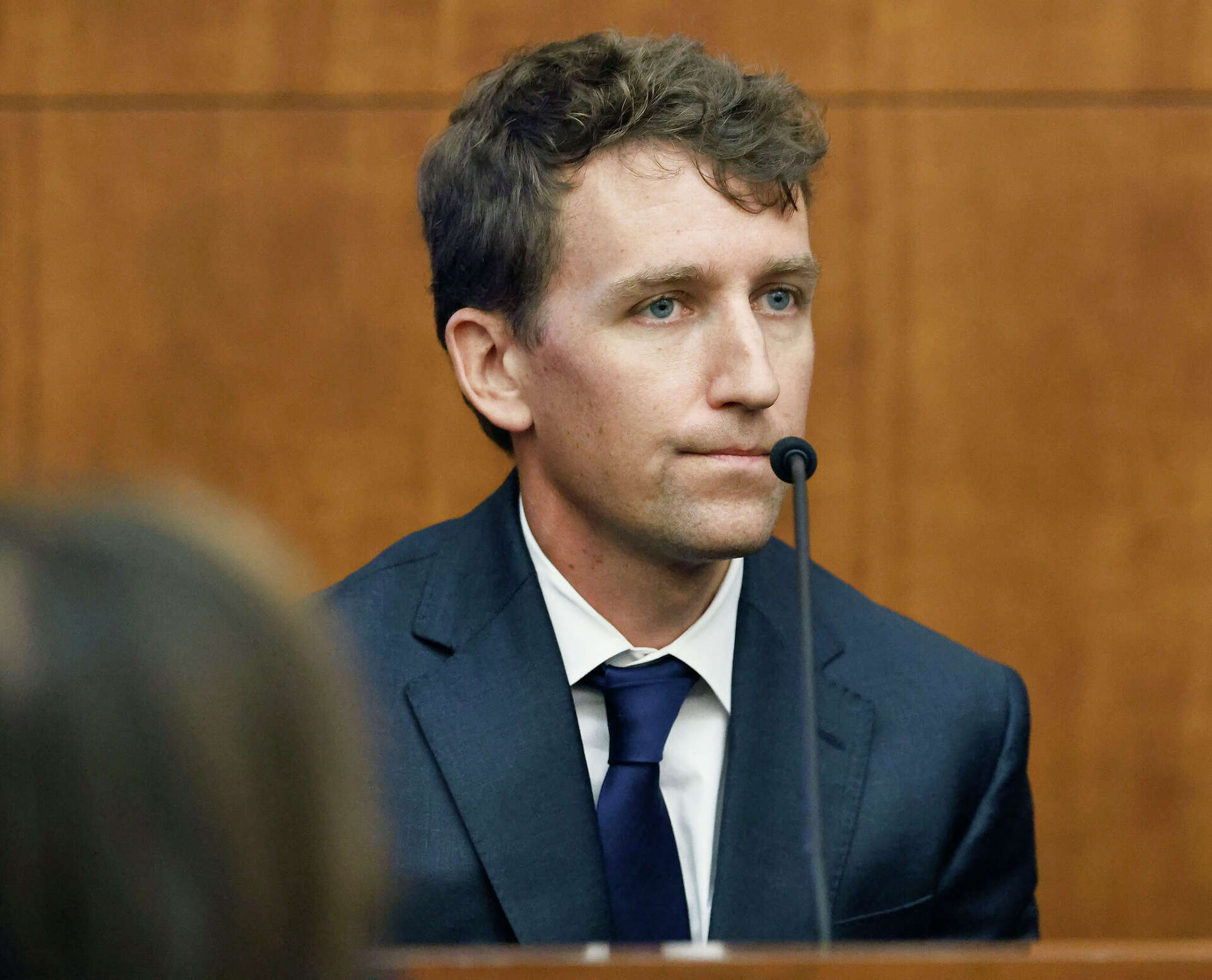
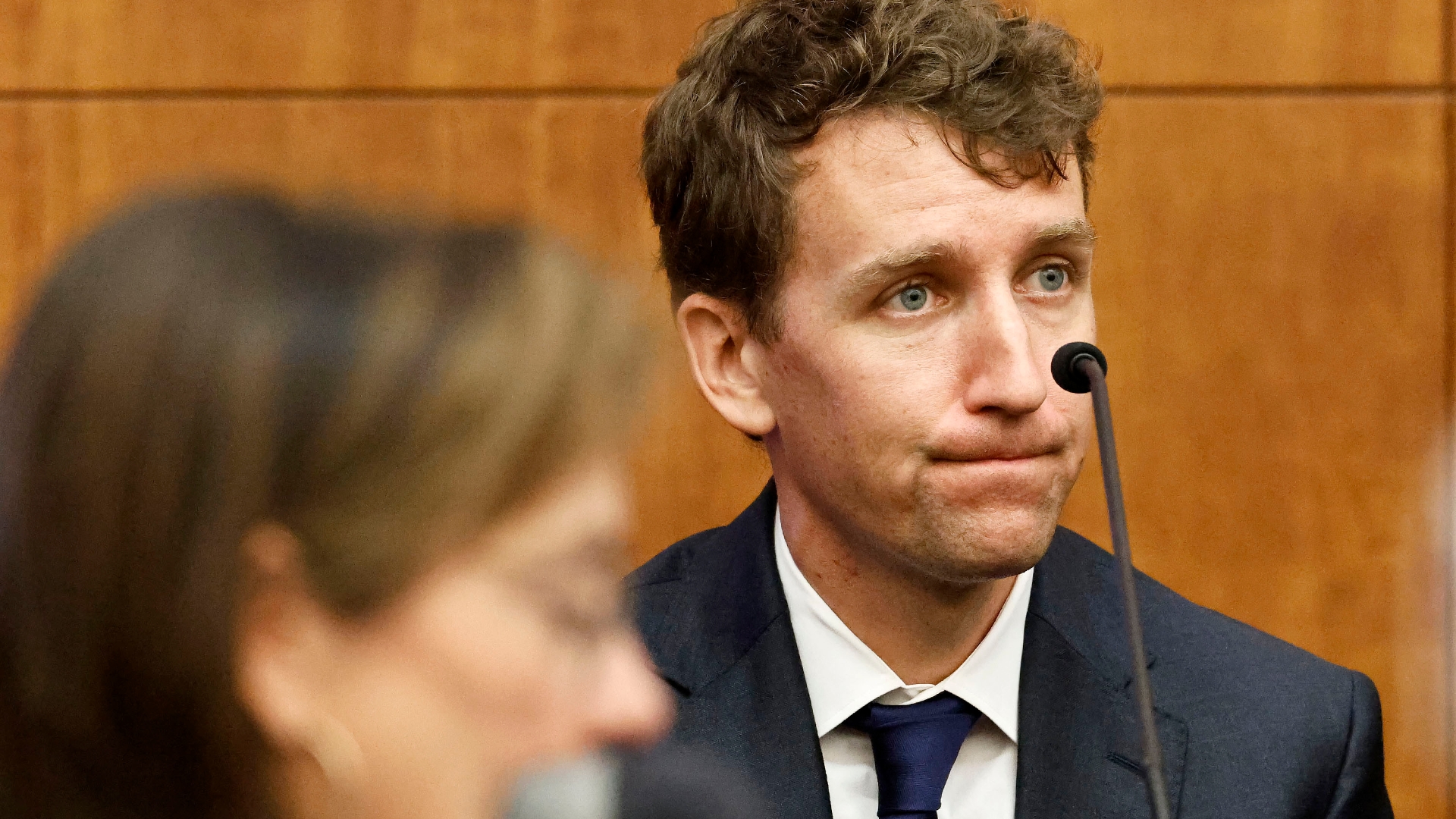
Public reporting shows Patrick in the courtroom record and honoring his children beyond it. Photos provide context; sourced evidence determines what a claim proves.

Our Instagram posts
Everything we have posted on Instagram, in two sets. First, the series that checks each conspiracy claim against the court record. Then the rest of our posts. Swipe or use the arrows, and tap a card to see it full size.
Ten cards. The cover, each recurring claim next to what the trial record shows, the bottom line, and the sixteen claims that keep coming back.
1 / 9
Announcements, how to preserve a post, how legal discovery works, and a little satire, in the order we posted them.
1 / 10
Source hierarchy
Primary trial materials come first. Contemporaneous reporting supports navigation and summaries. Social posts document that a claim exists, never that it is true.